



Summer tyres

Avis Google
4.9
2118 reviews

Summer tyres

Summer tyres

Summer tyres online in Switzerland

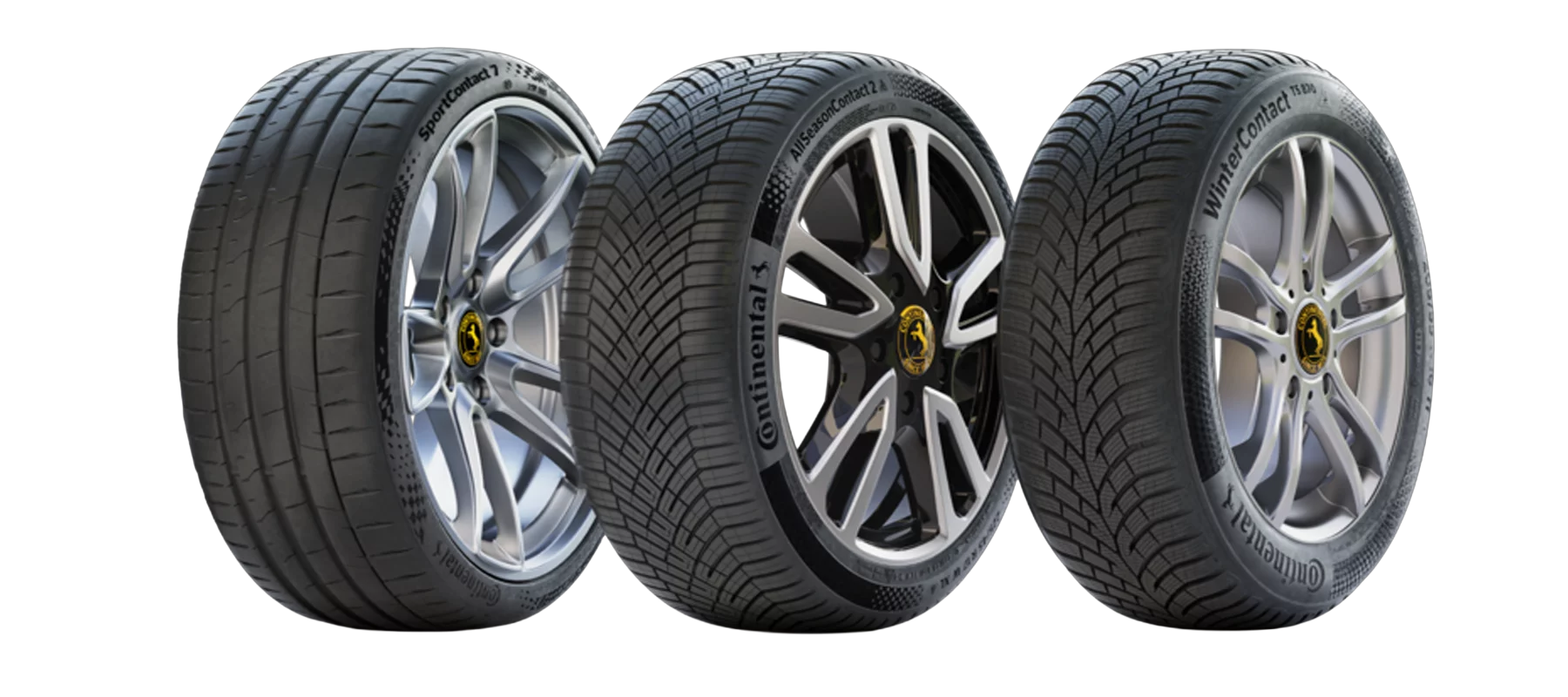
Summer tyres for city cars, saloons, SUVs and sports cars, from premium brands to more affordable alternatives. Pick your size above: only sizes available as a set of 4 are listed, at the price shown.

Tyres by brand

Best summer tyres: the best sellers in Switzerland

Tyres by size

Why switch to summer tyres

Once the thermometer stays above 7 °C, summer tyres take the lead: their firmer compound stops shorter on dry and wet roads, grips better in corners and wears more slowly than a winter tyre. Compare our best sellers, shop by brand or by size, and see our guide to the EU tyre label and tread wear.

Delivery across Switzerland.

Choosing the right summer tyres

Why drive on summer tyres?

A summer tyre is designed for temperatures above 7 °C. Its firmer compound and stiffer tread blocks keep their shape when cornering and braking: the car responds more precisely and stops in a shorter distance, on dry and wet roads alike.

Its wide longitudinal grooves channel water away to limit aquaplaning. And because its compound heats up and deforms less than that of a winter tyre in warm weather, it wears more slowly and slightly reduces fuel consumption.
When should you switch to summer tyres?

The “O to O” rule (from the German “Oktober bis Ostern”) is a useful guide: winter tyres from October to Easter, summer tyres for the rest of the year. Once temperatures stay above 7 °C for good, usually between late March and late April in Geneva and on the Swiss Plateau, the summer tyre has the edge again.

If you drive up into the mountains in spring, wait until there is no longer any risk of snow: on snow and ice, a summer tyre loses most of its grip.

Reading the EU tyre label

The EU tyre label compares three criteria:

  • Fuel efficiency (A to E): rolling resistance, which affects fuel consumption or the range of an electric car.
  • Wet grip (A to E): between the best and the weakest class, the braking distance on a wet road differs by several metres.
  • Rolling noise in decibels, with a class from A to C.

For dynamic driving, prioritise wet grip; for long journeys, fuel efficiency and noise.

Reading a tyre size

The size is shown on the sidewall of your current tyres and in the vehicle documents. Example: 205/55 R16 91V

  • 205: width in millimetres;
  • 55: sidewall height, as a percentage of the width;
  • R: radial construction;
  • 16: rim diameter, in inches;
  • 91: load index, here 615 kg per tyre;
  • V: speed rating, here 240 km/h.

Tempted by another size? Our tyre size calculator shows sizes with the same diameter and how much they differ.

Frequently asked questions

At what temperature should you fit summer tyres?

Once temperatures stay above 7 °C for good, usually between late March and late April on lower ground. The “O to O” rule (winter tyres from October to Easter) is a useful guide.

Can you drive on winter tyres all year round?

It is allowed in Switzerland, but not recommended: in warm weather, a winter tyre takes longer to stop, holds the road less well in corners, wears quickly and increases fuel consumption.

What is the minimum tread depth for a summer tyre?

1.6 mm is the legal minimum in Switzerland. To keep good braking on wet roads, the TCS recommends replacing summer tyres from 3 mm.

Do you need to change all four tyres at the same time?

It is ideal for consistent handling, and often essential on a four-wheel-drive car. Otherwise, change them at least one axle at a time and fit the newest tyres at the rear.

Also discover